
About
Learn how Power of Attorney Advice helps UK individuals and families create LPAs with confidence. Over 25 years of financial expertise. Contact us today.
Our Story
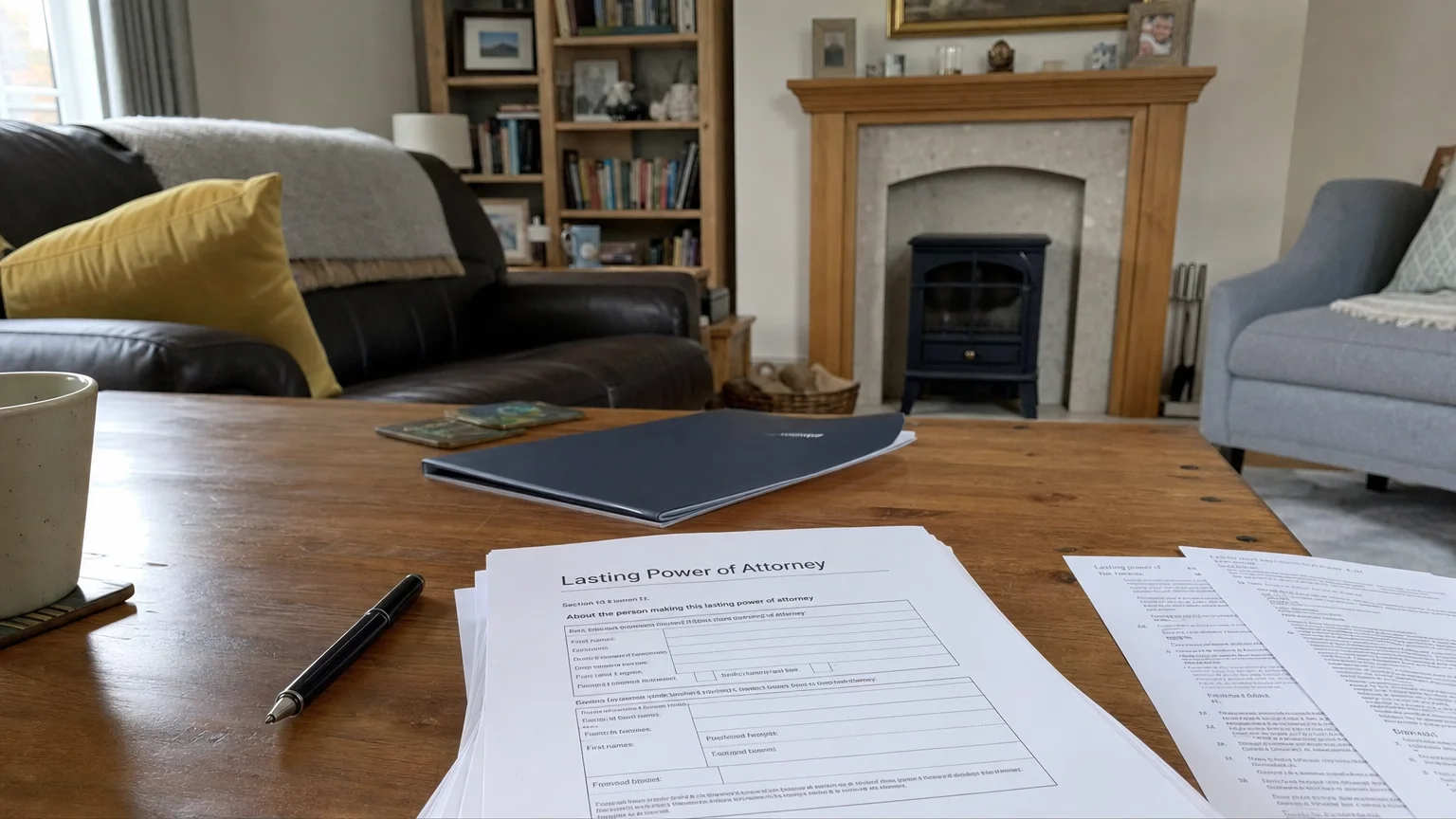
What Is a Lasting Power of Attorney?
A Lasting Power of Attorney (LPA) is a legal document that authorises one or more people you trust to make decisions on your behalf, either because you have lost mental capacity or simply because you want assistance managing your affairs. There are two distinct types available in England and Wales, and understanding the difference between them is the essential starting point for any planning conversation.
An LPA for Property and Financial Affairs covers decisions about your bank accounts, investments, property, bills, and other financial matters. An LPA for Health and Welfare covers decisions about your medical treatment, care arrangements, where you live, and your day-to-day personal wellbeing. The two documents operate independently — you can choose to have one or both — and each must be registered with the Office of the Public Guardian before it can be used. Our blog contains detailed guidance on both types if you would like to explore the differences before speaking with us.
What is the difference between an LPA and an Enduring Power of Attorney?
An Enduring Power of Attorney (EPA) was the predecessor to the LPA and could only cover property and financial affairs. EPAs created before October 2007 remain valid, but it is no longer possible to create a new one. If you have an existing EPA and are wondering whether it still meets your needs, an LPA for Health and Welfare would complement it, since EPAs have no equivalent for personal welfare decisions.
Can an LPA be used while I still have capacity?
Yes, an LPA for Property and Financial Affairs can be used as soon as it is registered, even if you still have full mental capacity — for example, if you simply want help managing your finances or are travelling for an extended period. An LPA for Health and Welfare, however, can only be used once a medical professional has determined that you lack the capacity to make a specific decision yourself.
What is the Office of the Public Guardian?
The Office of the Public Guardian (OPG) is the government body in England and Wales responsible for registering LPAs and supervising attorneys and deputies. Registration with the OPG is a legal requirement before an LPA can be used, and the OPG maintains a register of all valid documents. We will guide you through the registration process as part of our service.
Why an LPA Matters More Than Most People Realise
Many people assume that a spouse, adult child, or close relative automatically has the legal authority to act on their behalf in a crisis. In England and Wales, that assumption is incorrect. Without a registered LPA, even the closest family members have no legal right to access bank accounts, make medical decisions, or manage property on your behalf if you lose mental capacity. The consequences of that gap can be severe — and they tend to emerge at the worst possible time.
The alternative, if no LPA exists, is an application to the Court of Protection for a deputyship order. This process is considerably more time-consuming, more expensive, and more emotionally demanding than putting an LPA in place in advance. It also removes much of the control you would otherwise have over who acts for you and on what terms. An LPA, by contrast, lets you choose your attorneys, set specific instructions, and record your preferences while you are well and able to do so.
At what age should I consider setting up an LPA?
There is no minimum age beyond the legal requirement of being 18, and there is no “right” age to arrange an LPA. Capacity can be affected by accident or sudden illness at any point in life, not only in older age. Many people arrange their LPAs in their forties or fifties as part of broader financial and estate planning, but the most important thing is to act while you still have the mental capacity to do so — once capacity is lost, an LPA can no longer be created.
What happens to my finances if I lose capacity without an LPA?
Without an LPA, your bank accounts will typically be frozen and your financial affairs will be placed under the jurisdiction of the Court of Protection. A family member or other person would need to apply to become your deputy, which involves a formal legal process, ongoing reporting requirements, and associated costs. Assets such as property cannot be sold or transferred without court authorisation, which can cause significant practical difficulties for your family.
Can I have more than one attorney?
Yes, you can appoint multiple attorneys and specify whether they must act jointly (making all decisions together) or jointly and severally (able to act independently as well as together). You can also appoint replacement attorneys to step in if a primary attorney is unable to continue. We help you think through these choices carefully, because the structure you choose has real practical implications for how smoothly your LPA operates.
Our Approach to Lasting Power of Attorney Documents
Every LPA we prepare is built around the individual, not a template. What is appropriate for one person’s financial arrangements or care preferences may be entirely unsuitable for another’s, and we take that seriously. Our process begins with a genuine conversation about your circumstances, your wishes, and the people you are considering appointing as attorneys — because the quality of that conversation directly affects the quality of the document we produce.
We also believe that you should fully understand everything you are signing. Legal documents can be dense and unfamiliar, and it is our responsibility to translate the formal language into plain English so that you can make genuinely informed decisions. If questions arise after your documents have been completed, we remain accessible — one phone call or email is all it takes to reach us. You are welcome to learn more about how we work or to get in touch directly if you have a specific question you would like to discuss.
How do I choose the right attorney?
Your attorney should be someone you trust completely to act in your best interests, who is willing to take on the responsibility, and who is practically capable of carrying out the role. It is worth having an honest conversation with anyone you are considering before naming them in your document. Many people choose a combination of a family member and a professional adviser, particularly for financial affairs, to provide both personal knowledge and practical expertise.
Can I change or cancel my LPA after it has been registered?
You can revoke (cancel) an LPA at any time while you still have mental capacity, by completing a formal deed of revocation and notifying the OPG. You can also make a new LPA to replace an existing one. However, once capacity is lost, an LPA can no longer be revoked or amended — which is another reason why getting the document right from the outset matters so much.
What instructions and preferences can I include in my LPA?
An LPA can include binding instructions that your attorney must follow, as well as non-binding preferences that express your wishes without legally constraining your attorney. For example, a Health and Welfare LPA might include your preferences about where you would like to be cared for, or specific guidance about medical treatment. We help you think through these carefully so that the document genuinely reflects your values and priorities.
Our Services
Why Choose Power of Attorney Advice
Locally Owned & Operated
Power of Attorney Advice is based in Cwmbran, Gwent — we're your neighbors and we're invested in our community.
Licensed & Insured
We carry full licensing and insurance so every project is protected from start to finish.
Transparent Pricing
We provide honest, upfront quotes with no hidden fees. You know exactly what you're paying before work begins.
Satisfaction Guaranteed
We stand behind our work. If you're not satisfied, we make it right — no questions asked.